HISTORY OF EDGECOMBE COUNTY

NORTH CAROLINA
J. Kelly Turner and
Jno. L. Bridgers, Jr.
RALEIGH
Edwards & Broughton Printing Co. 1920
Copyright 1920
J. Kelly Turner JUN \2 1920
 TO THE MAKERS OF EDGECOMBE COUNTY HISTORY

— PAST AND PRESENT —

WHETHER UPON THE FIELD OF BATTLE;

IN THE HALLS OF STATE;

OR THE HUMBLE HOME;

THIS VOLUME IS AFFCTIONATELY INSCRIBED.

CONTENTS

Chapter I 13

Origin and Settlement

Immigrants from Virginia — Early Indian troubles — Town
Creek settled 1720 — Tar River expedition 1722 — Economic con-
ditions of settlers — Precinct established — Political controversy
1733-1742 — Period of immigration — Commercial expansion —
Halifax town 1744 — Erection of new counties — Tarboro incor-
porated — Account of Spanish War and incidents.

Chapter II 41

Colonial Government

English policy — Precinct courts — Oyer and Terminer courts —
Courts of Justice — Superior Court in Enfield — Political rep-
resentation contested — Function of local courts — Quit rent con-
troversy — Taxation — Riot and rebellion — Corbin seized — Mar-
tin visits Tarboro — Political significance — War of Regulation
— Tyron's appeal to the people — County representation.

Chapter III 73

Resolution

Pre-Revolutionary controversies — War preparations — Leaders
and response to the cause — Troops in the revolution — Members
in the Provincial Congress — Military organizations — Tempo-
rary government — War incidents in Tarboro— Tory uprisings
— Martin plans negro insurrection — Economic conditions —
Power of imprisonment suspended — Deserters in Edgecombe
— Battles of Swift and Fishing Creeks — Wilmington aided —
Close of hostilities.

Chapter IV 104

Politics After the Revolution

General Washington's visit — Rise of parties — Edgecombe and
Federal convention — Delegates to the Continental Congress —
County courts organized — ^County government — Inferior courts
and Quarter Sessions — Convention of 1835 — Organization of
parties — Henry Clay's visit 1845 — Political effect— Political
leaders — Whig agitation — Democratic controversy — War with
Mexico — Edgecombe volunteers — Military leaders — Coalition
of parties — Southern Rights movement — Campaign of 1860.


Chapter V 156

Slaveby

Indian slaves — Indentured servants — Negro slavery — Economic
importance — Inducement for importation — Law concerning
slavery — Local regulations — Law affecting servants — Patrol
system and its purpose — Hiring days — Method of punishment
State vs. Will — Value of slaves — Social life — Religious life —
Cause of religious indifference — Slavery and politics.

Chapter YI 186

Wab Between the States

Political convention of 1861 — Awakening of public sentiment —
Leaders of secession movement — Response to the call for troops
— Edgecombe Guards at Bethel — Military muster — Military
leaders — Edgecombe in earnest — Internal conditions — Federal
troops in Tarboro — Battle Daniel School house — Destruction of
Tarboro threatened — Contributions to the Confederacy — Con-
ditions in 1865.

Chapter VII and VIII 237, 259

Reconstruction

Economic conditions — Federal regime — Activities of republican
party — Frauds in county government — Political organizations
— Negro activities — Outrages committed — Retaliation — County
government resumed — Suspension of Quarter Session of Court
and Pleas — Political controversies — Free negro problem — Mu-
nicipal politics — Democratic victory — Resumption of law and
order — Leaders in reconstruction.

Chapter IX 281

Politics Since 1880

Democratic control over court system — Republican struggle in
politics — Political campaigns — Rise of populist party — Political
leaders — Fusion of parties — Party controversies — Campaigns
of 1892 to 1898 — Edgecombe in the war with Spain — Campaigns
of 1900 — Political significance — Economic conditions.

Chapter X 326

AoBicuLTxniE, Industries and Internal Improvement

Agriculture — Early methods of farming — Tobacco culture —
Introduction of marling and composting — Cattle raising —
Method of Stock farming — Manufacturing — Erection of banks
— Commercial activities — Early road improvement — Plank
roads — Stages — Water navigation — Railroads — Modern meth-
ods of industries.


Chapteb XI 359

Education
Early education — Period of opposition — Clergymen schoolmas-
ters — Effects of the revolution — Rise of academies — Leaders in
educational movement — State aid for free schools — Free educa-
tion for paupers — County appropriations — Free school contro-
versy — Movement for common schools — Consolidation of school
districts — Educational promoters — Modern education — System
of conducting schools.

Chapter XII 387

Baptists
Origin and controversies to 1782 — Expansion after the revolu-
tion — Dissensions over church organization — Rise of the Mis-
sion Baptist — Character and services of Joshua Lawrence —
Dissensions over church organization concluded — Rise of negro
churches.

Chapter XIII 432

Episcopal
English church and early governors — Edgecombe parish
erected — Early controversies — Religious conditions — ^Church
government — Edgecombe parish divided and political contro-
versy — Glebe lands and effect on the activities of the early
clergymen — St. Mary's parish divided — Period of decay — At-
tempts at religious revival — ^Conventions 1790 to 1794 and 1819
— Calvary church 1833 — Period of expansion — Present condi-
tions.

Chapter XIY 458

Presbyterians and Sons of Temperance
Early conditions — Itinerant ministers during the colonial
period — Activities of lay members — First church organized —
Home missionary plans — Sunday school activities — Leaders in
church work — Layman's movement — Controversy with Bap-
tists — Period of expansion — New church in Tarboro.

Chapter XV 467

Methodists
An account of the early Methodists and their religious convic-
tions — Joseph Pilmoor's services — Methodist controversies —
Activities of James O'Kelly — Results of Whitefield's teachings
— Division of Carolina Circuit — Account of Asbury's visits —
Revivals during the colonial period — Pastorate of Dr. Doub —
Period of expansion — Camp-meetings — Negro missions — Sketch
of Associate Reform Methodists — Account of Ellis meeting-
house, McKendree church, Swift Creek Mission, Temperance
Hall, and other churches — Conditions to 1900.


INTRODUCTIO]^

This work was begun several years ago, while Mr. Turner was
a student at Trinity College. It has been completed with the co-
operation of Mr. Bridgers, after interruption due to the World
War. Certain features of their labors deserve mention.

The careers of individuals and the description of notable events
are subordinated to the treatment of movements, industrial, eco-
nomic and political. The dominating theme is the environment
and activity of the average man as involved in organs of govern-
ment, labor systems, religion, education, economic life, and
political affairs. For information and data the authors have util-
ized a wide range of material, manuscript records, laws, news-
papers, biographies, histories and unwritten traditions. The work
is, I believe, a wider and more varied presentation of the life of
the people than is conceived in our county and local histories.

A varied feature of the work is its information regarding that
vital but neglected period of local history, the years between the
Revolution and the Civil War. There came to maturity institu-
tions and forces which originated in early days. How often are
these years of development glossed over in our local histories for
the benefit of the tumult and the shouting of martial times !

For these reasons I feel that the authors deserve recognition
and commendation for a meritorious as well as a patriotic work.

W. K. Boyd.

Trinity College.
Dec. 12th, 1919

archive.org/details/historyofedgecombe00turn
for full archive
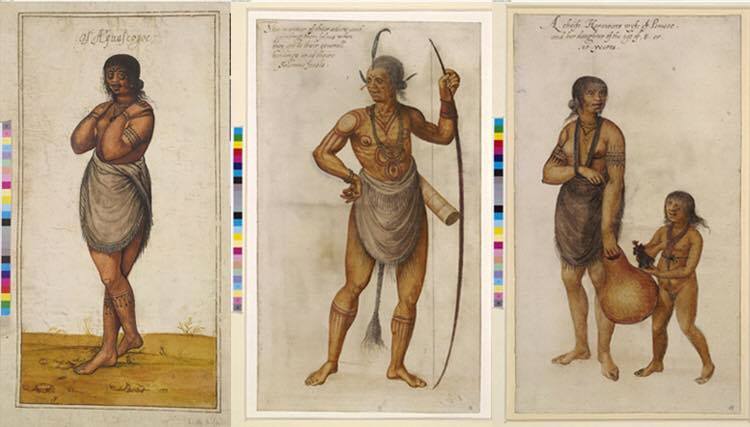
“History of Edgecombe county, North Carolina”



- Advertisement -